


 Home /
 Li-ion Battery Chemistry for Medical Devices: LCO, NCM, NCA, LFP Selection Guide


Table of Contents
- 1. Fundamentals of Medical Battery Cathode Chemistry
- 2. Comparative Overview of Cathode Chemistries
- 3. Chemistry-Specific Technical Characteristics
- 4. Multi-Chemistry Cylindrical Platform: KYS 12500
- 5. Chemistry Selection by Medical Application
- 6. Engineering Considerations in Medical Battery Design
Selecting battery systems for medical devices requires balancing energy density, safety performance, cycle life, and compliance with regulations. Medical applications involve higher reliability expectations than most consumer applications and even small fluctuations in energy reliability can lead to safety risks for patients.

As with many portable medical systems, lithium-ion batteries are used because of their versatile electrochemistry. Different cathode materials can produce a range of performance characteristics, allowing developers to target specific clinical applications.
This article offers a technical overview of four lithium-ion cathodes commonly used in medical systems—LCO, NCM, NCA, and LFP. Furthermore, this paper will examine the effects on medical device design. Multi-chemistry design will be considered using the example of a flexible, cylindrical battery system such as the Gloflux KYS 12500 (12.5 mm x 50.5 mm).
1. Fundamentals of Medical Battery Cathode Chemistry
A lithium-ion cell operates through the transfer of lithium ions to a metal-oxide cathode from a graphite anode. Cathode chemistry selection impacts:
• Nominal voltage and voltage curve
• Gravimetric and volumetric energy density
• Thermal stability and abuse tolerance
• Cycle life and capacity retention
• Battery management system (BMS) design
In health care systems, reliability of the system is the greatest concern, along with charging safety limits and how the system will perform clinically on a repeated basis.
2. Comparative Overview of Cathode Chemistries
| Chemistry | Nominal Voltage | Energy Density | Thermal Stability | Typical Medical Application Profile |
| LCO (Lithium Cobalt Oxide) | Approximately 3.7-3.85 V | High | Moderate | Compact electronic handheld diagnostic devices |
| NCM (Nickel Cobalt Manganese) | Approximately 3.6-3.7 V | High | Good | Portable medical devices |
| NCA (Nickel Cobalt Aluminum) | Approximately 3.6-3.65 V | Very High | Moderate | Lightweight and compact devices |
| LFP (Lithium Iron Phosphate) | Approximately 3.2-3.3 V | Medium | Excellent | Devices used in safety-critical operations with long life cycles |
Technical Note:
• The voltage described is a nominal voltage and is subject to change based on the specific chemistry and the manufacturer.
3. Chemistry-Specific Technical Characteristics
3.1 LCO – High Energy Density for Compact Devices
Of the available commercial Li-ion systems, LCO chemistry is among the highest in volumetric energy density.
Features:
• Highest capacity per volume, making it excellent for design in small medical devices
• Shows stable voltage plateau with slight variations (~3.7–3.85 V nominal)
• Slightly thermally unstable, so protection circuitry has to be extensive
Uses in the medical field:
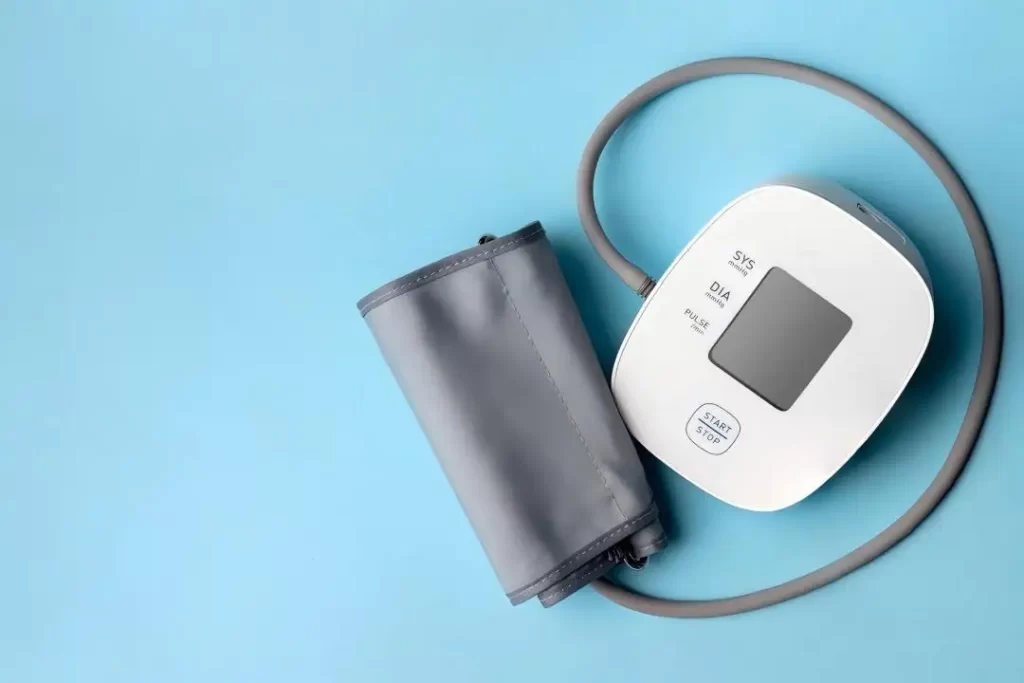
• Used in the design of space-critical hand-held diagnostic devices. Battery Management Systems (BMS) along with over charge, over discharge protection as well as thermal cut-off protection are required.
3.2 NCM – Balanced Performance Chemistry
With regards to NCM Systems, optimization can be decided at the Ni/Co/Mn positions, allowing greater freedom when balancing energy density and safety.
Characteristics:
• Design flexibility when balancing capacity and stability
• Good cycle life performance (several hundred to >1000 cycles depending on design)
• Well-established supply chain with broad industrial acceptance
Medical applications:
• Good for long-term portable monitors, infusion pumps, and other diagnostic devices.
3.3 NCA – High Energy Density for Lightweight Systems
NCA chemistry is designed to reach high specific energy through higher nickel contents.
Characteristics:
• Higher gravimetric energy density than standard NCM
• Lower thermal margin relative to LFP, requiring thermal design
• Great reliance on advanced BMS and safety design
Medical applications:
• Best for compact, high-load systems (emergency ventilators) or portable surgical instruments.
3.4 LFP – Safety-Oriented Long-Life Chemistry
With regards to thermal and chemical stability, LFP has an advantage due to olivine structures.
Key Characteristics:
• High cycle life often exceeding 2000 cycles under controlled conditions.
• Lower nominal voltage requires system level voltage compensation.
Medical Significance:
• Equipped for use in continuous monitoring systems and wearables. Applicable in situations where safety and stability for the long term are more critical than the energy density.
4. Multi-Chemistry Cylindrical Platform: KYS 12500
The KYS 12500 platform provides a cylindrical (12.5 mm × 50.5 mm) lithium-ion cell flexible to a variety of cathode chemistries in a standardized framework.

4.1 Platform Specifications (Reference Configuration)
• Dimensions: 12.5 × 50.5 mm
• Nominal Capacity: ~800 mAh (depends on application)
• Nominal Voltage: ~3.6–3.85 V (depends on chemistry)
• Charge Cut-off Voltage: Up to 4.2–4.4 V (depends on design of chemistry system)
• Internal Resistance: ~60 mΩ (typical)
• Max Continuous Discharge: Up to 3 A
• Pulse Discharge Capability: Up to 8 A (depends on application)
4.2 System Integration Features
• Integrated protection circuitry (overcharge / over-discharge / overcurrent / short circuit)
• Formation cycling for SEI stabilization
• Batch-level impedance and capacity consistency screening
• Compliance testing for IEC 62133 and UN38.3 standards
Important Technical Clarification:
Within LCO, NCM, NCA, and LFP systems, the voltage and charge limits vary a lot. The 4.4V charging profile does not apply to all chemistries as they must be defined on a case by case basis.
5. Chemistry Selection by Medical Application
| Device Category | Preferred Chemistry | Engineering Rationale |
| Handheld diagnostic devices | LCO / NCM | Energy dense, small form factor |
| Wearable monitors | LFP | Thermal stable and long cycle life |
| Nebulizers / portable suction | NCM / NCA | Optimized power and energy |
| Infusion Pumps | NCM/LFP | Trustworthy for repetitive cycles |
High pulse-load applications (e.g., motor driven actuation or communication bursts) may require a cell with high discharge capability irrespective of chemistry.
6. Engineering Considerations in Medical Battery Design
System-level design considerations also play an important role in medical battery design.
6.1 Protection Strategy
Design considerations include:
• Precision in defining the protection thresholds for overvoltage and undervoltage cutoffs
• Behavior of the recovery logic
• Quiescent current consumption
6.2 Capacity Consistency
The production of medical devices requires a consistent runtime to ensure an expected operational profile.
6.3 Self-Discharge Behavior
This is important for medical devices that are designed for standby or emergency use.
6.4 Mechanical and Electrical Customization
This involves:
• Optimization of tabs
• Design of connectors
• Adjustment of voltage thresholds
• Compatibility for integration at the pack level
Conclusion
Considering the use of lithium-ion chemistry in medical devices, it is not about which option is the most superior, but rather which option is the most appropriate for the specific use case.
The KYS 12500's configurable design allows for use of multiple different lithium-ion chemistries while providing the design the ability to adjust and iterate faster within the same design envelope.
FAQ
Q1: Which chemistry offers the longest cycle life?
The longest cycle life performance is usually provided by LFP.
Q2: Which chemistry provides the highest energy density?
The highest energy densities are typically provided by NCA and LCO.
Q3: Why is NCM so widely used in medical devices?
This is the result of the favorable balance between energy density, safety, and cycle life.
Q4: Are wearable medical devices suitable for use with LCO?
Yes, because of LCO's small size and high energy density.
Q5: Is the voltage of LFP lower than the other chemistries?
Yes, LFP's nominal voltage is typically in the range of 3.2 – 3.3V.
Talk to the Manufacturer
Resources & Insights

High Capacity Lithium Battery for Wearables: High-Voltage LiPo Cell Design
2026-10-19
Cylindrical Battery Packs for Laptops: 2S vs 3S vs 4S Battery Design
2026-10-19

Stage Lighting Battery Pack: Prevent Voltage Drop & LED Flicker
2026-10-19

Best Rechargeable Batteries for Smart Devices: Performance, Safety, and Selection Guide
2026-10-19


